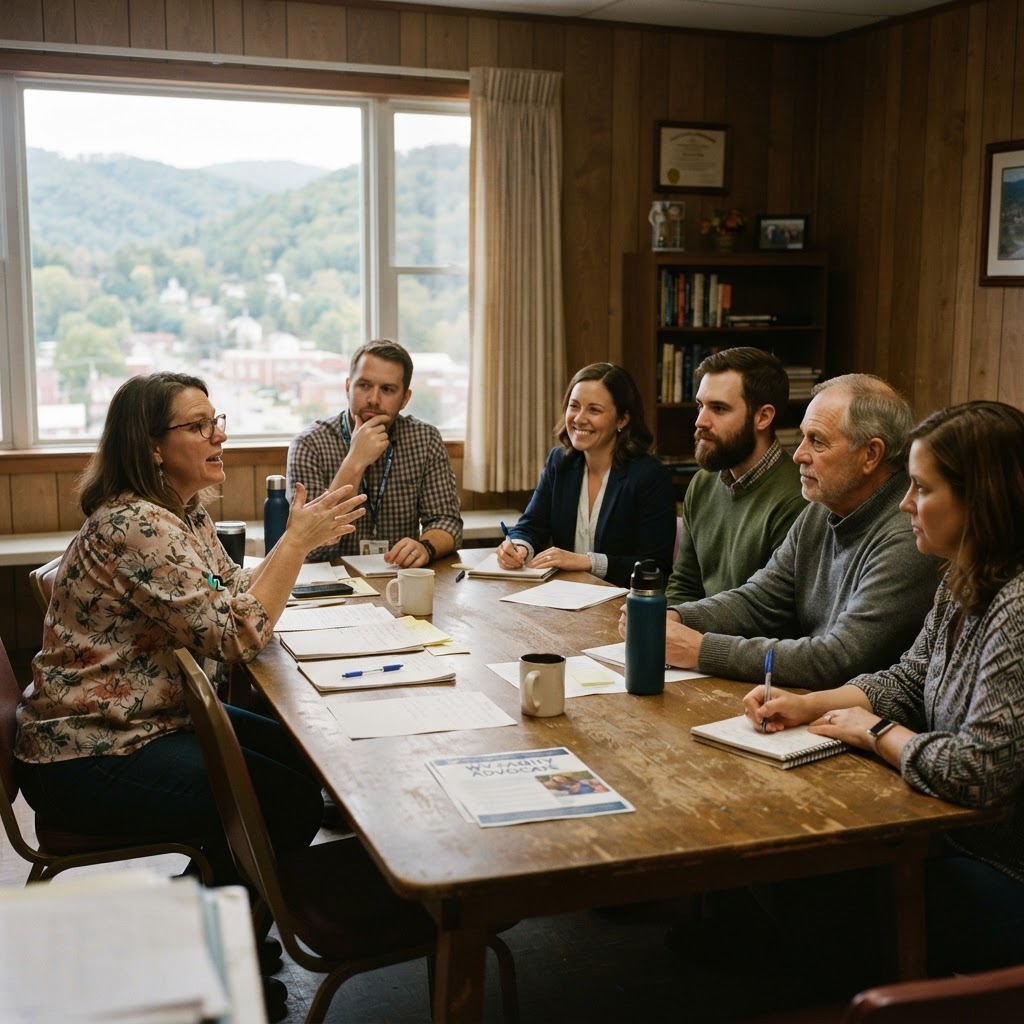
Help us build a clearer path for families.
FAF is seeking input and support from families, caregivers, schools, providers, agencies, community organizations, funders, and public leaders as the Randolph County pilot is developed.
There are several ways to help prepare the Randolph County pilot:
- Families and caregivers can share general experiences and community perspective.
- Schools, providers, agencies, and community organizations can help FAF understand existing resources and where families encounter difficulty.
- Funders and public leaders can help support a responsible, evidence-based pilot.
- Qualified professionals may express interest in contributing relevant expertise.
Begin with the relationships and pathways already serving the community.
Randolph County organizations understand local resources, responsibilities, constraints, and practical access conditions. FAF should learn from that experience before proposing changes.
Potential collaboration may include validating resource information, clarifying who is already involved and responsible, identifying where pathways succeed or stall, shaping respectful referral and follow-through practices, and interpreting pilot findings.
FAF is not asking partners to surrender authority, duplicate competent work, or endorse conclusions before evidence exists.
Possible forms of involvement may include:
- Existing programs and eligibility pathways
- Referral and practical-access procedures
- Who is responsible for what, and where one responsibility ends and another begins
- Appropriate coordination and escalation channels
- Pilot safeguards and administrative burden
- Successful existing pathways
- Recurring patterns that may warrant examination
Strong pilot design begins with local knowledge and clear roles.
Respect professional authority. Reduce avoidable ambiguity.
Schools, healthcare providers, behavioral-health professionals, human-service organizations, and public agencies already hold important expertise, authority, and responsibility.
FAF should first understand who is already involved and responsible, how existing pathways operate, and what information or permission is actually needed before supporting cross-organizational action.
The proposed pilot should test whether FAF can make responsibilities and next steps clearer without replacing professional judgment, lawful authority, or competent existing work.
Where Coordination Can Help
Identify the organizations and professionals already involved, what each is responsible for, and what actions have already occurred.
Determine when communication or coordination is appropriate, permitted, and useful—and when it is not.
Distinguish a referral from acceptance, eligibility, actual service receipt, resolution, and a lasting outcome.
Document where existing pathways worked, where FAF made a meaningful difference, and where it did not.
Partnership should make responsibilities clearer without adding unnecessary reporting, meetings, or duplicate case-management work.
Help define the public-interest guardrails for a disciplined pilot.
Public leaders may help FAF understand existing authority, accountability, funding, coordination, and oversight structures before the pilot design is finalized.
The purpose of engagement is not to secure endorsement of a predetermined result. It is to improve the pilot question, safeguards, measurement, governance, and standards for deciding what should happen next.
- Review the pilot question and proposed scope
- Clarify existing public roles and authority
- Examine privacy, security, consent, and accessibility safeguards
- Identify feasible coordination and escalation procedures
- Support responsible funding and governance
- Encourage independent or external review where feasible
- Define evidence gates for continuation, change, limitation, or reconsideration
FAF is intended to remain nonpartisan and evidence-disciplined.
Public engagement should improve accountability—not predetermine findings or turn individual experiences into unsupported claims.
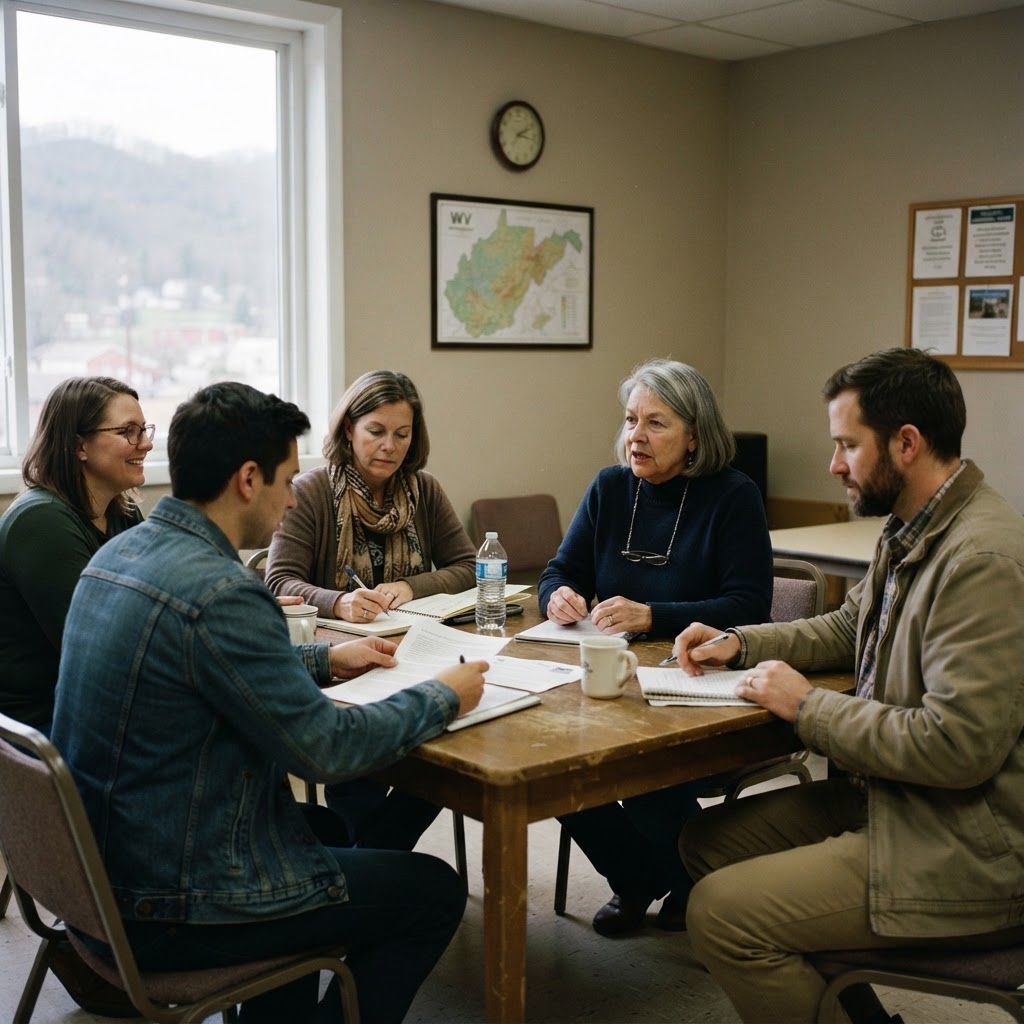
Fund a credible test—not a predetermined result.
FAF is preparing a focused Randolph County pilot intended to test whether consistent follow-through makes a meaningful difference when an important need involves more than one organization and remains unresolved.
Funding should support responsible design, implementation, safeguards, evaluation, and transparent learning—including findings that FAF was unnecessary in some cases or that the proposed model should change.
People
Defined staffing, supervision, training, and professional capacity appropriate to the approved pilot scope.
Technology
Scoped design, development, testing, accessibility, privacy, security-readiness, and implementation work for FAF Connect. Do not describe the system as complete, compliant, secure, production-ready, or pilot-ready.
Evaluation
Clear measures, data-quality practices, outcome verification, analysis, external review where feasible, and transparent reporting of limitations.
Pilot Operations
Partner engagement, outreach, documentation, governance, safeguards, contingencies, and practical operational readiness.
Support for the pilot is support for an honest test. It is not a commitment to a predetermined conclusion or future expansion.

Lived experience should shape the pilot without being treated as proof of a whole system.
People who have navigated multiple programs can help FAF understand where information was clear, where access occurred, where a pathway stalled, what remained unresolved, and what respectful follow-through would have looked like.
FAF may seek voluntary feedback about:
- Priorities and desired outcomes
- Existing supports and responsible organizations
- Referrals and practical access
- Service receipt and unresolved barriers
- Clarity of next steps
- Dignity, choice, communication, and administrative burden
Sharing general feedback is not intake, a request for emergency assistance, or a promise of service. Do not submit confidential health, education, legal, or case information through the general contact form.
Contribute expertise where the pilot has an approved need.
FAF may need time-limited professional or community support as pilot design and organizational readiness advance. Any participation should be tied to a defined task, appropriate supervision, confidentiality expectations, and the contributor's actual competence.
Interest does not imply an available role or commitment. FAF will match participation only to approved needs, scope, capacity, supervision, and safeguards.
Build only the capacity the approved pilot requires.
Fair Access Foundation is preparing the organizational capacity that may be needed for a proposed Randolph County pilot.
Staffing structure, employment classifications, qualifications, timelines, and opportunities remain subject to approved funding, governance, operational readiness, safeguards, and final pilot design.
FAF welcomes early professional introductions, but no introduction should be interpreted as an application for a currently posted position or a guarantee of future consideration.
Broad Areas of Potential Contribution
Family & Community Experience
Experience listening to family-defined priorities, working respectfully with communities, and understanding existing service pathways may be relevant to future approved work.
Pilot Operations & Coordination
Potential needs may include disciplined communication, documentation, follow-through, administration, program support, and coordination that respects existing authority.
Evaluation, Data & Specialized Capacity
Potential needs may include evaluation, outcomes, technology, accessibility, finance, compliance, development, communications, education, health, behavioral health, human services, or other specialized expertise.
These are broad areas of possible contribution—not job categories, posted vacancies, or commitments. Not every area will become a staff, contractor, or volunteer role.
What Matters to Us
Make thoughtful decisions while respecting professional roles, boundaries, and appropriate authority.
Stay with important work until progress, completion, or the unresolved barrier is understood—and document what did and did not work.
Treat families, colleagues, providers, public agencies, and community partners with dignity and accurate documentation.
Document work carefully and be willing to report what worked and what did not, without overclaiming.
Work across organizational boundaries without replacing or controlling competent existing organizations.
Represent facts, limitations, responsibilities, and outcomes accurately, including when FAF made no meaningful difference.
Interested in possible future FAF work?
FAF welcomes early introductions from professionals and community members whose experience may be relevant as the organization prepares a proposed Randolph County pilot.
This is not a job application or a response to a currently posted vacancy. Future staffing needs, classifications, qualifications, timelines, and opportunities will be determined only after funding, governance, safeguards, operational readiness, and final pilot design are approved.
Submit only professional information relevant to your interest. Do not include confidential client, family, health, education, legal, or case information.
The people who build FAF will help determine the quality of the institution it becomes.
Preparing the people and practices required for a responsible pilot.
FAF's current leadership is developing the organizational, operational, governance, partnership, and evidence practices needed to determine whether a responsible Randolph County pilot can proceed.
Phil Perrine
Founding Executive Director
Fair Access Foundation
Leads FAF's organizational development, pilot preparation, governance, funding strategy, public engagement, and long-term institutional direction.
Dave Armentrout
Program Director
Fair Access Foundation
Dave supports the development of resolution-continuity practices, pilot workflows, operational readiness, documentation standards, and responsible program procedures.
Leslie Roy
Operations & Access Coordinator
Fair Access Foundation
Supports FAF's operations, partner coordination, community access activity, logistics, document control, and pilot-readiness follow-through.
Technical guidance grounded in real-world development experience.
FAF is incorporating experienced technical guidance as it plans the responsible development and long-term direction of FAF Connect.
Josh Coffman
Technical Development Advisor
CEO & Owner, SunnyByte
Josh is an entrepreneurial technologist with nearly two decades of experience in advanced web-based software, e-commerce, cross-platform mobile applications, AI-enabled systems, ETL pipelines, API integrations, and SaaS development. As CEO and owner of SunnyByte and co-founder of Adoptimist.com, he brings a practical, business-focused perspective to FAF’s technical development planning and advisory work. His approach centers on using technology to accomplish clear organizational goals and candidly evaluating initiatives that do not make operational or business sense.

Help test the question without presuming the answer.
FAF is beginning with one county, a proposed pilot, and a commitment to use competent existing systems first.
Useful involvement may include local knowledge, professional expertise, partnership, funding, governance, evaluation, or candid feedback about where the proposed model may—or may not—add value.
The standard is simple: protect families, respect existing responsibility, document what occurs, and let the evidence determine what comes next.
Use what works. Test what remains unresolved.
Report the result honestly.